Lesson 9: Stablecoins and Stability Mechanisms
🎯 Core Concept: The Stability Trilemma
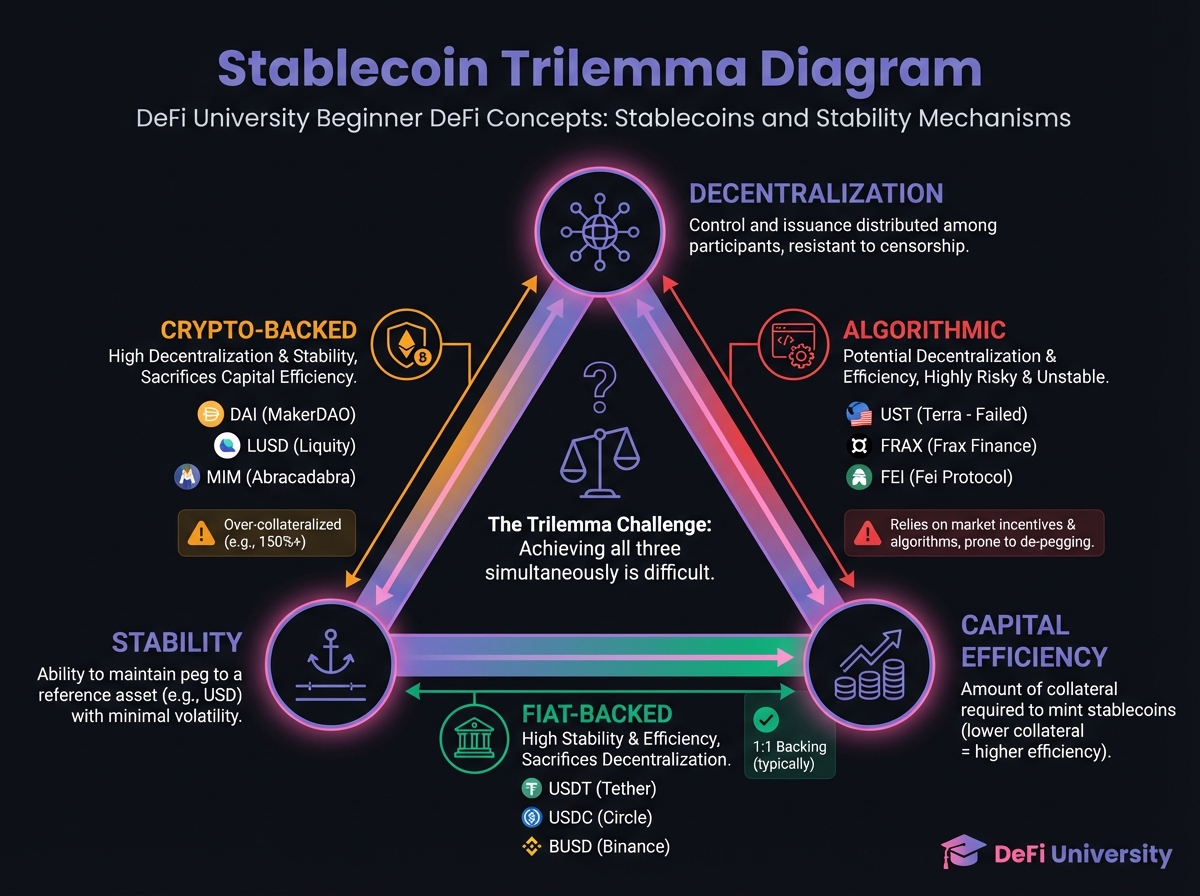
Cryptocurrencies are volatile; a functional financial system requires a stable unit of account. Stablecoins bridge this gap, but their design is constrained by the Stablecoin Trilemma: a stablecoin can only optimize for two of three properties—Decentralization, Stability, and Capital Efficiency.
📚 Types of Stablecoins
Fiat-Collateralized (e.g., USDC, USDT)
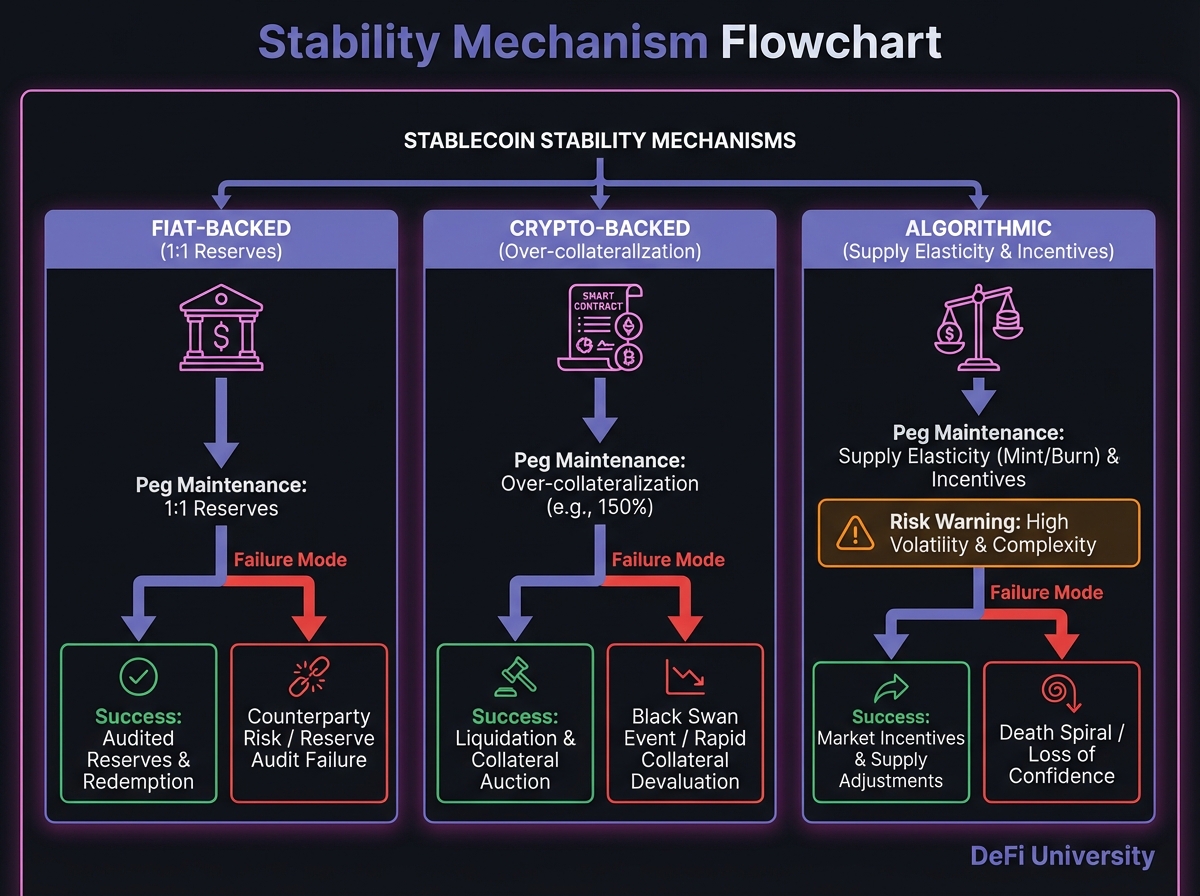
A centralized entity holds $1 in a bank account for every 1 token issued. These are capital efficient (1:1 backing) but suffer from centralization risk (custodian can freeze funds).
Crypto-Collateralized (e.g., DAI)
Decentralized and trustless. Users lock volatile crypto assets in a smart contract to mint stablecoins. This requires over-collateralization to absorb volatility.
Algorithmic
These attempt to maintain a peg via supply elasticity and incentives rather than full collateral backing. History (e.g., Terra/Luna) suggests these are highly risky and prone to "death spirals."

Interactive DeFi Protocol Explorer
Use this interactive tool to explore and compare different stablecoin protocols:
Interactive Token Economics Calculator
Use this interactive tool to analyze stablecoin token economics:
🔑 Key Takeaways
- The Trilemma is Real: No stablecoin perfectly achieves all three properties
- Fiat-Backed: Most capital efficient but centralized
- Crypto-Backed: Decentralized but capital inefficient
- Algorithmic: Risky, prone to failure
- Choose Based on Priorities: Decentralization vs. efficiency vs. stability
Next Lesson: In Lesson 10, we'll explore flash loans and advanced DeFi primitives.